In an earlier post I told you about the love I came across passing a local preschool. This is what the love looks like in April. Snowdrops!

In an earlier post I told you about the love I came across passing a local preschool. This is what the love looks like in April. Snowdrops!
Learning English, Swedish, French or Chinese? Or any other language?
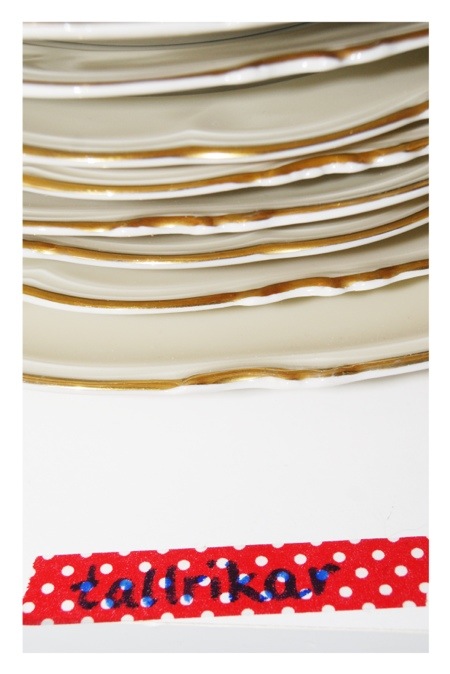
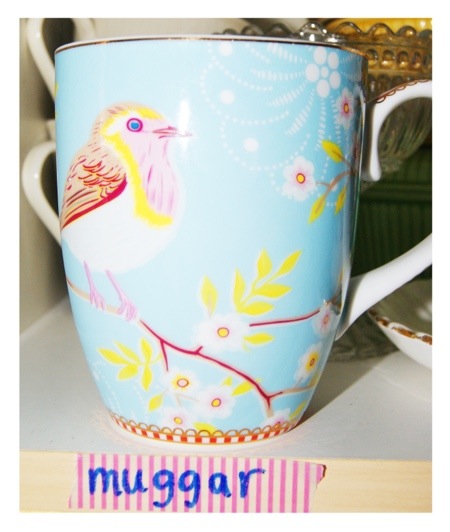
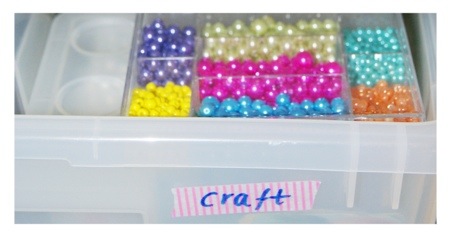
To work on your vocabulary when learning a new language I want to share the following tip with you. Put washi tape on items, drawers, shelves and boxes and write the object’s name on it. Remove when you have learnt the word and choose new objects.
Great for bilingual kids too, expanding their vocabulary! At home I use it for my children (TCKs) to not forget words after returning to passport country after expat life.
Washi tape is pretty masking tape, originating from Japan. It is removable and reusable, slightly transparent with a paper feel to it (made from rice paper). It comes in all sorts of patterns and colors; select one that goes well with text for this language learning project! Washi tape is commonly used for scrapbooking, art journaling and other creative projects.
Ready, craft, go! Learn!



To teach children a language, native or second, I find the app My Playhome useful. It’s a dolls house app complete with a family home and a set of characters that you by drag and drop move around the house, letting them do different things. It is simple yet detailed, which makes it suitable for young kids as well as older ones. Sit next to your child and play together; asking the child to talk about what is happening, describing both the actions and the settings. You can also give instructions to the child from easy ones as “put the book on the table” to “go into the kitchen, open the top right cupboard door and take out a cupcake, have the boy eat half of it and put the other half in the trash can”.
Practice verbs by opening the refrigerator door, pour water in a glass, feed the baby and set the table.
Work on prepositions by putting objects or people in different places.
Vocabulary training is obvious, and don’t forget the adjectives! Turn the lights on and off, bring a red apple from the garden into the living room, and find the most colorful necklace in the master bedroom or put on some soft music.
Don’t forget the silly stuff – like putting dad in the fish tank or letting mom jump on the couch!
The app in itself does not contain words, only pictures.
My Playhome is available in a free Lite version and a regular version. It’s also available for Androids.
The regular version comes with characters of different ethnicity – which I think is a plus – more rooms and a garden.
Have fun!
On the second day I spent in Zürich – on the look-see trip – I took the s-bahn into the city center and visited not only one but several bookstores. I absolutely love bookstores and the Swiss ones did not disappoint me. Where I had previously relocated to I had always been fine with English but moving to a part of Switzerland where German (or
Swiss German) ruled I was eager to finally start learning German properly, on location. So I decided to start right away by buying children’s picture / word books for me and my one- year-old. Now these types of young children’s books might have been created to teach mother tongue, but they are of course equally useful for multilingual children, if not more! AND, my point here, for adults too. They are packed with useful words, and by buying books relating to a certain theme I started building my vocabulary around the situations I found important and also knew we were likely to find ourselves in sooner or later. An example is the children’s sturdy board book on going to the doctor’s office and the hospital. Also note the kitchen section 😉 .
One of my friends from a previous expat adventure had told me she was given this type of book as a toddler and her mother had scribbled dates in it to mark the learning of the word (which to them was mother tongue). My friend took on the tradition and made the same thing with her child.

The literal image of Sweden is very often a little red cottage. As are volvos, midsummer and cinnamon rolls. Other things might be dala horses, an IKEA building and Swedish fish. Blond people, Pippi Longstocking, elks and lucia are others. What are yours?
Here are a few red little cottages for you!


What are your images? Share in the comments (the bubble image next to the headline or below).
Vetebröd. Sweet (yeasted) bread. Cardamom? Of course!
Vetebröd is a traditional component of the Swedish fika (drinking coffee and eating something sweet with it).

And the grammar.
Listening to the radio you probably can’t avoid the news. The news are usually read in a fast pace, and what I find after having returned to Sweden, contain a lot of slang words that didn’t use to belong there. Only the other day I heard them use the Swenglish word “hosta” as in “to host” talking about a major sports event on the news.
If you are learning Swedish you might want to try to listen to Klartext. Klartext is a news program by the Swedish Radio channel P4. The news is easier to follow than regular news since the pace is slower and the words used are easier to understand.
You can either listen to the radio (18-18.10 on weekdays), via the web page, as a podcast or via an app on your phone. The app is called SR Play. Listening to Klartext is a good way of practicing your understanding of spoken Swedish, perhaps in addition to your Swedish classes.
You can also read their news on the website.
Visit Klartext’s website to practice your Swedish! You will find links to the news, the app and pod casts here, as well as the written news.
For English info on Klartext go here.
Please leave a comment – have you tried it? Did you find it difficult?
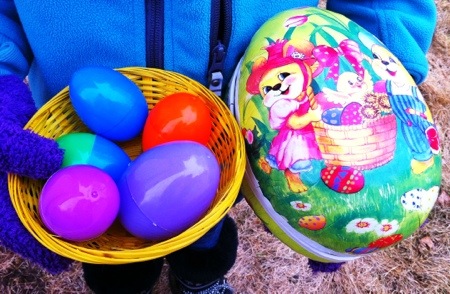
Easter and Saturday. Snow in the air and a cold, rather uninviting yard. But that does not stop our tradition of egg hunting. Our plastic eggs from expat time in Michigan have served us well and still do. We also hide the larger Swedish eggs filled with candy – my favorite is marcipane eggs with a thin chocolate layer and a pastel colored crust.
In the morning I boil the breakfast eggs with some yellow onion peel to make them yellow. We also paint some eggs for lunch using food coloring pens. Real messy but a must.
Lamb is a favorite for lunch/dinner!
What are your traditions for Easter?

Last year I remember we had a very vivid discussion in my expat network about the Swedish tradition of dressing up as an Easter witch. People were appalled by the thought of it; seeing Easter witches as something dark and scary. It can be hard to understand and accept other culture’s traditions and it can be equally hard for a person familiar to them to get why they can be provoking or upsetting. We are usually so caught up with and used to the traditions (hence the word) that we don’t really think about the whys and hows and what it can possible look like to an outsider.
I tried to explain that the Easter dressing up is like Halloween – kids knock on doors, sometimes leaving a homemade Easter card and hope for candy in return. But we all have different references to witches (come on, we do!) and it wasn’t until I googled pictures of cute little Easter witches that we all agreed that it wasn’t such a bad thing after all! Boys and girls dress up in long colorful skirts and headscarves (the most important attribute) and red colored cheeks and lots of freckles. Lately we also see little Easter Men and Bunnies.
The word “påskkärring” actually does not even mean Easter witch but rather “Easter Old Woman”. There is very little in common with the witches people believed in during the 17th Century – also people did not drink coffee in Sweden at the time, and a dressed up kid usually carries a coffee pot around accompanying the broomstick; sometimes even a black cat.
So, when can you expect them to arrive – the kids, not the witches? On the West coast of Sweden it is mostly common to be visited by påskkärringar during Easter Saturday, whereas Thursday is more common in the rest of the country.
In Sweden we decorate twigs of birch with feathers for Easter. We usually put this “påskris” indoors, in a vase, but outdoors is seen too, and some people even decorate trees in the garden. I do. There is nothing else to cheer up the garden this time of year.
Not only feathers liven up the twigs; eggs are popular too, as are chickens.