Tag Archives: living in / moving to Sweden

#seetheworld Twitter Chat on Sweden is coming up!

#seetheworld

Join the Twitter chat on Sweden Aug 14! The community of #seetheworld will share and learn about Sweden! Whether you have already been to Sweden or not, live here or don’t, know something about it or nothing at all – come join us! This is a nice opportunity to chat about Sweden with fellow curious twitter friends. And, to connect with new friends! We all want to #seetheworld!

To join the conversation log in to Twitter and follow the hashtag #SeeTheWorld.

You can also follow

me, the co-host, @globatris

the founders @theCultureur and @RovingAltruist

and of course @SeeTheWorldChat

https://twitter.com/thecultureur/status/365212764148473856

Learn the Swedish language by listening to music

Learn the Swedish language by listening to music

Learning a language it is beneficial to listen to and sing along to music in that language. You learn new words but more importantly you get a sense of the rhythm and intonation of the language, as well as learning pronunciation.

Below is a link to a popular summer song in Swedish, by Tomas Ledin. It is called “Sommaren är kort” – summer is short.

video with sing-along text.

To learn the Swedish language by listening to music you need to pick up the words in the song. I have made a Sommaren är kort – glosor translating Swedish into English.

Sing along!

What is a TCK – a Third Culture Kid?

What is a TCK – a Third Culture Kid?


“A Third Culture Kid (TCK) is a person who has spent a significant part of his
or her developmental years outside the parents’ culture.” Third Culture Kids – Growing Up Among Worlds by David C. Pollock and Ruth E. van Reken

Origin of term TCK

Sociologists Ruth Hill Useem and John Useem coined the term “Third Culture”, in the 1950s. They spent a year in India with the purpose of studying Americans living and working there. After having met not only expatriates from the US they noticed that the lifestyles of the expatriates differed from home and host cultures. It made up a culture of its own, shared by other expats. Useems labeled culture of origin as first culture, the host culture the second and the “shared commonalities of those living internationally mobile lifestyle” as the third culture (p 14, Third Culture Kids – David C. Pollock and Ruth E. van Reken, 2009). While John Useem focused on the adults Ruth Hill Useem took an interest in the young expatriates. She referred to them as Third Culture Kids.

20130707-092402.jpg

Top Ten Tips for Moving to Sweden

Top Ten Tips For Moving To Sweden

1)      Securing employment in Sweden can be a bit of a challenge. Often, the language barrier can be an issue, but as a native English speaker you will have an advantage among other expatriates.

2)      Many English expatriates opt to become teachers at international schools. Having a British Post Graduate Certificate in Education is an asset as well as an intermediate level of Swedish. However, the qualifications will vary depending on your teaching level and school board.

3)      You can find work online through company websites or through Arbetsförmedlingen, which is the largest job placement website in Sweden. You may also find work through Stepstone, Thelocal.se or Monster, which are also popular search engines.

4)      Similar to other Scandinavian countries, the Swedish healthcare system is funded by taxpayers; however as with many other nations, the public health care system does not cover optometry, dentistry, or orthodontics to name a few.

5)      Prescription medication must be provided by a physician, and it is provided through your personnummer then sent directly to the network of drugstores across the country. Thus, it is very important to receive this number as you will need it for many things.

6)      When visiting a doctor, you may be required to pay a small fee of about 150 to 300 SEK. After 1,100 SEK have been paid within one year, further healthcare will be provided free of charge.

7)      Primary education in Sweden is mandatory for children between the ages of 6/7 and 15/16 and it s free. Children can attend pre-school (förskola) between the ages of 1 to 5. Pre school is very common in Sweden as it aids in the child’s development and learning.

8)      There are also a few options available for private schooling. Within greater Stockholm, you will find Sigtunaskolan, which offers boarding for boys and girls. Another notable private school is Lundbergs skola, which is located within proximity of Kristinehamn.

9)      Higher Education institutions offer programs taught entirely in English or in Swedish. Sweden is home to many internationally recognized universities such as Uppsala University, Lund University and The Stockholm School of Economics.

10)   You may also choose to learn Swedish through private institutions such as Folkuniversitetet or you may seek Swedish courses at a higher education institution. However, Swedish courses at a university are not publicly funded. Alternatively, many private firms offer Swedish language training to expatriates.


This post was sponsored by Overs; a UK removals firm, specializing in removals to the UK, Europe and  worldwide. Get in touch and see how we can help you: http://www.overs.co.uk/
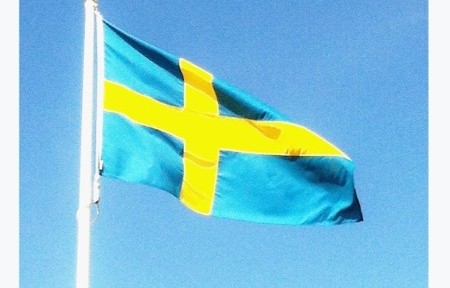
 

Midsummer – what’s it all about?

Midsummer

Midsummer in Sweden or elsewhere, or just interested in learning what it is all about?

Flowers in your hair – as a crown -, Swedish smörgåsbord when it comes to food or just the herring and new potatoes. Midsummer pole and traditional dancing, picking wildflowers and … rain. All is Midsummer.

I found an article in New York Times very well describing a Midsummer Day’s Dream. Read it here!

20130620-144419.jpg

Any point in making friends with expats who leave?

In my last post I very briefly talked about summer time as the time when expat friends leave. You can read it here. A reaction I received was that it can be quite exhausting with the constant effort of making new friends, and the sadness when people leave. I agree; it is. Of course it is. But it doesn’t make it not worth it.

When I was about to move the last time, two new expatriate families moved into the village where I had been living for 3,5 years (with no other expats with young kids – how’s that for timing!). We met a few times but there was really not time or energy enough to bond properly before we left.

On the other hand I have met people last minute at other expat locations with whom I have kept contact through the years.

You never know, do you? So, grab the chances, but cut yourself some slack – if you believe timing is way off then be okay with not trying too hard.

Here is a link discussing the point of making friends with people who leave. Click!!

20130620-144600.jpg

Expat friends leaving

Summer. That single word promises a lot. Time off, no school, days at the beach, travel, sun, shorts … and people leaving. Relocation prime time. Dear expat friends moving on to another country – or perhaps yourself. Time to say goodbye; to promise you will see each other again. Soon.

Personally, I like to leave first. How about you?

Read some tips on leaving/being left by Olga Mecking.

Compare cost of living tool for moving abroad

Moving abroad and local cost

Are you thinking of expatriating? If you haven’t yet decided whereto local cost of living might have an impact on the decision. Even if you know which will be your new expat country it can be interesting to find out the local price ranges.  Expatriating or not; perhaps you are just interested in comparing cost of living in different countries and locations.

Cost of living calculator

On expatistan.com you can enter cities for comparison to get an overall percentage of how much cheaper or more expensive a city is to another. You can also get down to details as how much a bottle of milk is. The website service is based on user input of prices. Why not help adding prices to the cost of living comparisons?


Red and ripe and Swedish lesson

20130510-083134.jpg
Swedish strawberries.
Svenska jordgubbar.
So sweet and longed for. We Swedes always claim Swedish strawberries are the best; special. Grown in the open, taking their time to ripen they are a must on Midsummer. As almost every day during summer. Is there a better snack really? I love having them for breakfast too. On top of the muesli and sometimes on a piece of freshly baked bread with cream cheese.

Sometimes I pick my own strawberries; living in Switzerland a Swedish friend and I hired a babysitter to take the babies on a walk along the fields so we could introduce the toddlers to strawberry picking! Not price smart, however that was not the point.

Swedish lesson:

en jordgubbe – a/one strawberry
två jordgubbar – two strawberries
den jordgubben – that strawberry
mogna jordgubbar – ripe strawberries
Jordgubbarna är söta. The strawberries are sweet.
jordgubbssylt – strawberry jam
jordgubbssaft – strawberry juice/squash/cordial
en jordgubbstårta – a strawberry cake
att rensa jordgubbar – to rinse strawberries
att snoppa jordgubbar – to hull strawberries

Are merry-go-rounds culturally different?

The other day I learnt that merry-go-rounds in Sweden, as well as in the rest of Europe, generally turn clockwise whereas they in North America run counter-clockwise! A search on Google confirms this. Reality? Even though I’ve been an expatriate in both locations I must admit I don’t know; I never thought about it. What are your experiences? Comments please – let’s solve this expat problem!

20130507-142720.jpg
En karusell (a carousel)