Cold winter temperatures are back. The almost ever present (at least it feels that way) West coast wind makes it even more freezing. I spent a few years in Mid Sweden and it never felt as cold there in the winter as it does in Gothenburg. It’s all about humidity and wind. Cold days usually mean clear skies though and the sun is doing its best to brighten up and warm our days! There’s not much color outdoors for photography, so light and frost can make all the difference!
Tag Archives: Sweden Swedish
What are your biggest struggles learning Swedish?
What are your major struggles learning Swedish?
Replies to this question via twitter and IRL include trying to actually speak it. Most people in Sweden are fairly happy to speak English which makes it easy to avoid using Swedish in every situation that holds the opportunity.
Another common answer is the prononciation of “sje-ljudet”.
Fitting Swedish classes in in a busy schedule, or having babies and young children at home all day also make it difficult to study. Here Skype works well – no time wasted on travelling to class and you can do it with babies and toddlers at home. Want to learn more?
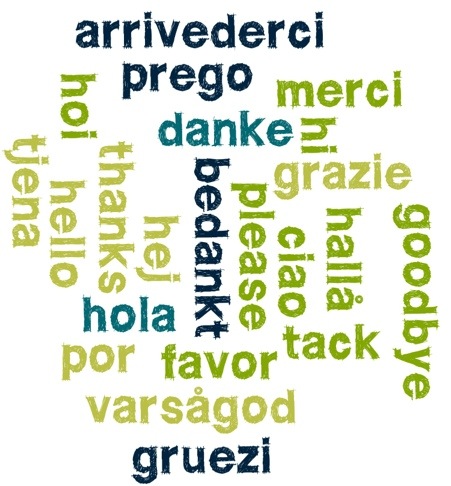
Learn a few words before you travel
Knowing at least a bit of the local language is important to adapt to a new culture. Learn how to greet before your move, and how to say thank you, and teach your kids too. This is a good start when arriving. I remember my mother taught me how to say “play” in German, on the ferry, when I at the age of seven went to Germany for the first time. It was a very good word to know to start playing with other kids on the boat.
Also for vacationing purposes it is fun to know a bit of the local language. When I was working as an Italian teacher the basic courses usually involved a lot of tourist conversations – food, restaurants, travelling, shopping, accommodation. And the text books contained quite a few pretty pictures 😉 .
Some try to learn the language before they go, some start once they get there. I have done both. What about you? What worked well?
Spring – for a while at least.
Spring is definitely in the air. It is still cold, but it is sunny!! Birds are singing and the little snow we have had this season is long gone. It is not pitch dark but bright day light when I get up in the morning.The daffodills grow each day and I´ve had coffee outside in the garden twice already. It can only get better. But according to the weather news it can appararantly get worse too. Winter is supposed to be back for a visit next week, and March promises to be the coldest March in a long time. Warmer times will not be here until May. WHAT???
So, during lunch break I needed to step outside for a few minutes in my new spring shoes before the snow revisits. I took the opportunity to shoot a short video for teaching Swedish while I was at it.
Winter photo
Inspiration
The word inspire comes from the Latin word inspirare. It literally means “to blow in”.
I think it is a wonderful way to understand the word,
to truly think of what inspiration means to us;
how important it is.
Think about:
What is inspiration to you?
Where do you find it?
How do you use it?
In Swedish inspire is inspirera, and inspiration is simply inspiration!
Food in a tube – not only for space.
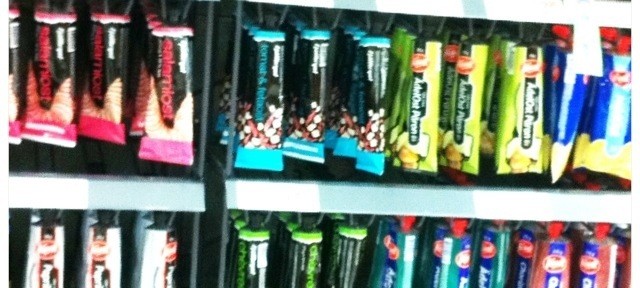
Yesterday I had a conversation on twitter about caviar. Not the expensive one, but the Swedish breakfast spread that comes in a tube. Yes, you heard me; we eat it for breakfast, and yes it is tube-food. This means all the colorful tubes in the grocery store are not necessarily toothpaste but food. There is also soft cheese on tubes.
The caviar looks like a cream somewhere on the color scheme between pink and salmon. It is salty. It goes well with boiled eggs. Either you slice the egg and have a caviar and egg sandwich, or you simply put some caviar on your egg and eat with a spoon. Cold potatoes are also a perfect match for caviar as is in my opinion chives.
Swedish people that relocate abroad often miss the caviar (find out what else they miss here). There are probably not many shops around the world selling Scandinavian food that don’t carry the product. In the Us I could buy the Swedish version in a tube at a Russian supermarket (there was no IKEA at a decent distance).
A non-Swedish friend of mine told me of the first time she experienced caviar. It was on a visit to Sweden. We all know how lovely a hotel breakfast can be, and this proved to be no different – there was a lovely pinkish spread that to my friend couldn’t be anything but strawberry flavored. It wasn’t. Imagine her surprise, and may I say shock, when it was all salt and not sweet at all.
But there has been some flirting with sweet flavors from one of the producer´s. In 2007 banana caviar was introduced, and this was mentioned in my twitter feed yesterday. I had fully forgotten about this. Deliberately, I suppose. Though I must admit, I haven´t tried it.
Postman never rings twice. Or even once.
Another thing that I had put on my list of first impressions moving to Sweden was the mail and parcel service. Abroad I had parcels and boxes delivered to my door, by the mail company. The postman would ring the doorbell, I would open and scribble my signature on some electronic gadget and I would get my stuff. The Kavat shoes for the kids! The handbag that I had had to return since the shop assistant had neglected to remove the alarm device. The DVD player. The contact lenses ordered from Sweden (yes – cheaper than buying on location). Here there is a slip in the mailbox urging me to go to the grocery store to pick it up, or a text message. Few people are at home during the day in Sweden. People can’t open the door to the mailman.
To queue or not to queue – that’s not a question; that’s cultural habit.
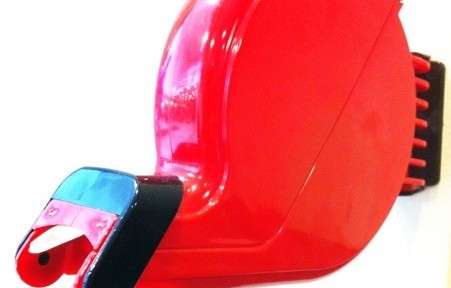
Queuing is special in Sweden. If you feel Swedes are being distant and you want some physical closeness – join the lines for the ATMs. There you will find it. Even when it is your turn to withdraw the money you can be sure of having someone behind you, just an inch away. I have never seen the painted lines on the ground here, marking the private zone. Not sure it would help though. Why? I keep thinking it’s because in Sweden queuing might not have been practiced enough. In our culture there is usually always queue numbers. You can use this system for buying the softest prosciutto and tasty cheddar, for getting tampons and ibuprofen, for that annoying bank and post matters, for the weekly white tulips, for the cardamom laden cinnamon rolls, for that hot new too expensive dress and for inquiring about the cost of traveling to a far away resort. Not long ago it was also used for buying chardonnay. There is simply a system telling you when it is your turn.
What happens when another check out counter opens up in the grocery store in Sweden? Usually the last person in line for the already open one runs to the newly opened counter. This is apparently not a question of who has been waiting the longest, but of who is the fastest runner. I have to admit I never really thought about this until I expatriated to the US. There it was always the next in the existing waiting line that was served by the new counter. No exceptions. Once a man behind me darted out of the line and went for the new check out. The sales girl said with an icy, stern voice (think about immigrant control at an American airport and you get the picture) “Sir, I said NEXT IN LINE pls.” Don’t think he ever dared to shop there again.
On the other hand I have seen yet other systems. Let me mention to you when I tried to get lunch at a much known hamburger/fast food chain in Turin, Italy. It was like going to a rock concert where the counter would be the stage. Oh, did I mention I had a toddler and a giant (robust thank God) Swedish stroller with a hungry baby in it? Imagine trying to squeeze the stroller and the kids through the masses of hungry teenagers shouting their orders in loud, beautiful Italian. And then back out again after what seemed an eternity. I wish I could say it was the best burger I’ve had. At least it was the most memorable.
the Chubby Fat Tuesday Bun – semlor recipe
Today is Fettisdagen. Let me decode that into National Day of the Semla. Now it´s all clear, right?
Semla is a sweet chubby wheat bun, cardamom laden, filled with golden almond paste and whipped cream. Originally semla was only eaten on Shrove Tuesday, as a last blissful treat before Lent. Today we know better and eat semlor (we need to go into plural here) all winter long. Fettisdagen has gone from being the only day to enjoy our precious pastry to the day you must enjoy at least one of them. Because as you all know we have fika (coffee break) at work. That means you are likely to down your first semla already by ten in the morning.
Semlor can be bought in every bakery, grocery store or gas station in Sweden. Sometimes you make your own, and as a Swedish expat you simply have to make your own (unless your expatriate adventure has taken you to the Nordic or Baltic countries) if you want to join the club.
If you make it past the photos below, find out how I make my Swedish fika treats; semlor recipe to follow.
This year I found ready made buns (albeit a bit flat) in the store, made just for semlor. Link if you don´t. 🙂
- Cut off the tops, scoop out the center of 8 buns, and put it in a food processor.
- Add 125g of almonds and 1 dl confectioners’ sugar and GO!
- Pour 1 dl heated milk into the mixture making it that special heavenly paste.
- Fill up the holes abundantly with the almond indulgence and top up with whipped cream.
- Put the lid back on and dust with confectioners’ sugar.
Voilà!
If you use Us cups, add some almonds and use half of a cup of confectioners’ sugar and milk.
Happy baking!