Tag Archives: expat mom / mum / mother

Food in a tube – not only for space.

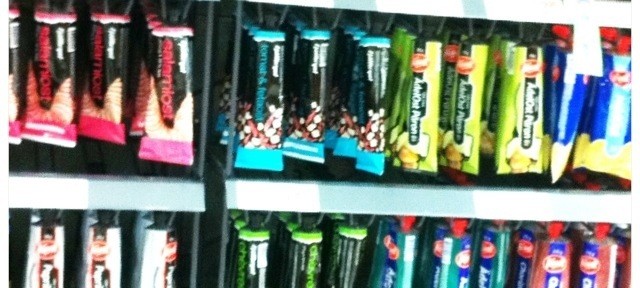
Yesterday I had a conversation on twitter about caviar. Not the expensive one, but the Swedish breakfast spread that comes in a tube. Yes, you heard me; we eat it for breakfast, and yes it is tube-food. This means all the colorful tubes in the grocery store are not necessarily toothpaste but food. There is also soft cheese on tubes.

The caviar looks like a cream somewhere on the color scheme between pink and salmon. It is salty. It goes well with boiled eggs. Either you slice the egg and have a caviar and egg sandwich, or you simply put some caviar on your egg and eat with a spoon. Cold potatoes are also a perfect match for caviar as is in my opinion chives.

Swedish people that relocate abroad often miss the caviar (find out what else they miss here). There are probably not many shops around the world selling Scandinavian food that don’t carry the product. In the Us I could buy the Swedish version in a tube at a Russian supermarket (there was no IKEA at a decent distance).

A non-Swedish friend of mine told me of the first time she experienced caviar. It was on a visit to Sweden. We all know how lovely a hotel breakfast can be, and this proved to be no different – there was a lovely pinkish spread that to my friend couldn’t be anything but strawberry flavored. It wasn’t. Imagine her surprise, and may I say shock, when it was all salt and not sweet at all.

But there has been some flirting with sweet flavors from one of the producer´s. In 2007 banana caviar was introduced, and this was mentioned in my twitter feed yesterday. I had fully forgotten about this. Deliberately, I suppose. Though I must admit, I haven´t tried it.

20130219-231453.jpg

Postman never rings twice. Or even once.

Another thing that I had put on my list of first impressions moving to Sweden was the mail and parcel service. Abroad I had parcels and boxes delivered to my door, by the mail company. The postman would ring the doorbell, I would open and scribble my signature on some electronic gadget and I would get my stuff. The Kavat shoes for the kids! The handbag that I had had to return since the shop assistant had neglected to remove the alarm device. The DVD player. The contact lenses ordered from Sweden (yes – cheaper than buying on location). Here there is a slip in the mailbox urging me to go to the grocery store to pick it up, or a text message. Few people are at home during the day in Sweden. People can’t open the door to the mailman.

To queue or not to queue – that’s not a question; that’s cultural habit.

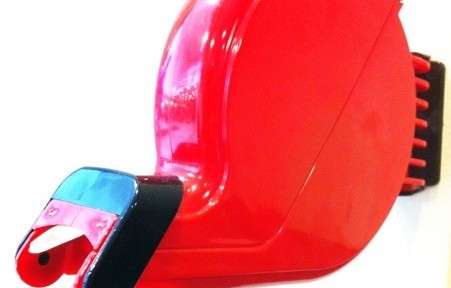
Queuing is special in Sweden. If you feel Swedes are being distant and you want some physical closeness – join the lines for the ATMs. There you will find it. Even when it is your turn to withdraw the money you can be sure of having someone behind you, just an inch away. I have never seen the painted lines on the ground here, marking the private zone. Not sure it would help though. Why? I keep thinking it’s because in Sweden queuing might not have been practiced enough. In our culture there is usually always queue numbers. You can use this system for buying the softest prosciutto and tasty cheddar, for getting tampons and ibuprofen, for that annoying bank and post matters, for the weekly white tulips, for the cardamom laden cinnamon rolls, for that hot new too expensive dress and for inquiring about the cost of traveling to a far away resort. Not long ago it was also used for buying chardonnay. There is simply a system telling you when it is your turn.

What happens when another check out counter opens up in the grocery store in Sweden? Usually the last person in line for the already open one runs to the newly opened counter. This is apparently not a question of who has been waiting the longest, but of who is the fastest runner. I have to admit I never really thought about this until I expatriated to the US. There it was always the next in the existing waiting line that was served by the new counter. No exceptions. Once a man behind me darted out of the line and went for the new check out. The sales girl said with an icy, stern voice (think about immigrant control at an American airport and you get the picture) “Sir, I said NEXT IN LINE pls.” Don’t think he ever dared to shop there again.

On the other hand I have seen yet other systems. Let me mention to you when I tried to get lunch at a much known hamburger/fast food chain in Turin, Italy. It was like going to a rock concert where the counter would be the stage. Oh, did I mention I had a toddler and a giant (robust thank God) Swedish stroller with a hungry baby in it? Imagine trying to squeeze the stroller and the kids through the masses of hungry teenagers shouting their orders in loud, beautiful Italian. And then back out again after what seemed an eternity. I wish I could say it was the best burger I’ve had. At least it was the most memorable.

20130219-110942.jpg

Men with strollers. In groups.

The first few days back in Sweden I noticed all the dads out walking babies and toddlers in strollers. Weekdays and weekends. I was used to seeing women with strollers. Even when the parents were out walking together the men usually did not push the prams. But because I´m Swedish I didn´t really find it weird; I did not jump to the conclusion that Sweden must attract an enormous amount of male babysitters; it was just such an unusual sight. Dads on lengthy parental leave was something I had never experienced. And here they came in groups.

Another child related observation was all the snow suits. We arrived in December and every single toddler was dressed in beaver nylon fabric. Even relocating from Switzerland this looked funny – I only really saw snow suits in the ski slopes there, but usually a two piece winter gear seamed more popular. The winters in Sweden are not always snowy and white but quite often just wet. So we made another acquaintance – fleece lined rain gear. When we lived in the US we could not even find normal rain gear in kids’ sizes. A nice grandmother had to carry it over on visiting. Because Swedish people go outside in any weather, which was confirmed by another first impression – zillions of people out walking in the rain.

Tomorrow I´ll continue down my list of first impressions upon returning to Sweden after expat life. Ciao!

20130214-235647.jpg

Save your first repatriation impressions

Repatriation impressions

When I moved back “home” I wrote down my first impressions. I have moved and settled quite a few times and I know that sooner or later many of the first impressions will fade away. What you find astonishing, weird, beautiful or just different might become everyday and taken for granted. I’m not saying all of it will, but first impressions are simply not just called first impressions without a reason.

I moved back to the same little town I had once left. It was all familiar yet quite different. I was looking upon the village with different eyes. The very first thing that struck me was how coastal it all looked. Lots of wooden houses in different pale colors, the older ones with gingerbread work. It was a dark winter evening but yet I felt the presence of the sea without actually seeing it – all due to the building style of the houses. Today I don’t see that anymore. But sometimes when I pass a certain house I think about this first impression I had returning from expat life, and try to get the feeling back. It would have been lost without my notes.

Why saving first repatriation impressions?

I am so happy I saved these first images and thoughts. I have even written on top of the paper that I expected to not find any of it peculiar after a while. Some things I can still see why I wrote down, others are a complete surprise to me today. It is really amusing. It is also something to reflect upon; how quickly do we adapt? Do we ever fully integrate and accept things? When repatriating; do we go back to the same values? It is also a reminder of what we found marvelous in the beginning and that we just take for granted by now; a reminder to still appreciate it.

My advice to you is to write things down if you are in a new place or situation. I did the same thing each time I had a baby. I kept a tiny notebook by the bed and tried to scribble down a few lines about the new life. These memories are golden. Save them!

Pls share or comment! I love to hear from you!

If you wonder why I quoted “home” – find out why 😉

20130214-235002.jpg

Love at first sight #20

In October I passed by a pre school. The kneeling gardener (yes they actually had one!) was planting bulbs. She told me she wanted the kids to see a heart of snow drops first thing in the morning when spring arrives. Isn’t that just adorably lovely!

20130214-124444.jpg

the Chubby Fat Tuesday Bun – semlor recipe

Today is Fettisdagen. Let me decode that into National Day of the Semla. Now it´s all clear, right?

Semla is a sweet chubby wheat bun, cardamom laden, filled with golden almond paste and whipped cream. Originally semla was only eaten on Shrove Tuesday, as a last blissful treat before Lent. Today we know better and eat semlor (we need to go into plural here) all winter long. Fettisdagen has gone from being the only day to enjoy our precious pastry to the day you must enjoy at least one of them. Because as you all know we have fika (coffee break) at work. That means you are likely to down your first semla already by ten in the morning.

Semlor can be bought in every bakery, grocery store or gas station in Sweden. Sometimes you make your own, and as a Swedish expat you simply have to make your own (unless your expatriate adventure has taken you to the Nordic or Baltic countries) if you want to join the club.

If you make it past the photos below, find out how I make my Swedish fika treats; semlor recipe to follow.

stages of baking a semla


This year I found ready made buns (albeit a bit flat) in the store, made just for semlor. Link if you don´t. 🙂

  • Cut off the tops, scoop out the center of 8 buns, and put it in a food processor.
  • Add 125g of almonds and 1 dl confectioners’ sugar and GO!
  • Pour 1 dl heated milk into the mixture making it that special heavenly paste.
  • Fill up the holes abundantly with the almond indulgence and top up with whipped cream.
  • Put the lid back on and dust with confectioners’ sugar.

Voilà!

If you use Us cups, add some almonds and use half of a cup of confectioners’ sugar and milk.

Happy baking!

A real cheesy dish if you ask me.

Cheese fondue was something my parents made in the 70s. I assume. At least there was an old artifact from the era in one of the kitchen cabinets – a fondue pot. I hadn’t tried the dish many times – it was more or less extinct in Sweden and had been replaced by more modern dishes. But here we were; New Year’s Eve in Switzerland and we had decided to abandon our tradition of fireworks and fresh seafood in the middle of the night and honor our newest home country by proudly making our own cheese fondue. We consulted our classic Swedish cookbook; and yes there was a recipe and yes it seemed doable. So we went ahead. Maybe that´s where we went wrong. A Swedish cookbook. I mean, this wasn’t exactly in the age before Internet and Google but … you know; sometimes you just don´t think twice. Or maybe we did and just decided not to involve the mysterious Swiss-German in our culinary experiment.

Let´s just say it was a disappointment. Did not rock my boat at all. Happy New Year. And no fireworks either.

Half a year later, in the summer, we had guests from Sweden. We drove to the picturesque little town of Vevey by Lake Geneva and spent a few days. For lunch we visited a restaurant my family had tried earlier – we knew they had fondue on the menu as well as great entertainment for the kids consisting of empty pizza boxes with crayons and small surprises. We sat down and began to order. Lots of food and as a starter we decided to share a small cheese fondue – our guests had never had it and were eager to try. And we wanted to give it another go. The waiter said “Non.” We insisted and found ourselves dragged into a discussion, or rather argument, of why and why not we could have the fondue. Our arguments were in the lines of

  • It´s on the menu
  • We would like to have it
  • We would like to sample a local dish
  • Our guests are here from Sweden for 10 days only– not coming back in the winter!
  • Other guests at the restaurant are having it

The waiter´s argument was simply “you don´t eat cheese fondue in the summer. It is too hot.” Period.

Well, he finally took our orders – including the fondue – and we set out to enjoy a tasty meal in the glorious summer weather. Blue sky, an abundance of flowers, steam wheelers on the lake – you get the picture.  Vevey is truly a beautiful place to visit.

The kids’ dishes arrived, and a little bit later so did ours – with one exception; the fondue. This was clearly not a case of customers know best, or even of us being customers.  The waiter had taken upon himself to save us from the, in his eyes, horrible mistake of having cheese fondue in summer.

During our years to follow in the Zurich area we had fondue – both cheese, fish and meat – several times, both in our home and at restaurants. We even tried it again at New Year; this time at a rustic bistro where they served a special champagne fondue menu. But it wasn’t until our last year in Switzerland that we got to enjoy the true soul of cheese fondue. Along with a few other expat families we were invited to dear Swiss-Swedish friends, permanently residing in Switzerland on a farm. Together we prepared the fondue and the rest of the meal in a separate area on the farm dedicated to festivities. It was a furnished barn with large wooden tables and benches, a small kitchen and even a bathroom. Perfect for parties, even more perfect for cheese fondue parties. Because one thing we have learnt; it smells. And as good as it smells when you eat it, it is not very appealing the next day.

Here is the recipe we use nowadays when we prepare cheese fondue.  It´s a plain simple recipe, yet the best – we skip the Kirsch. It was passed on to us from very good expatriate friends in Switzerland. Cheese fondue has very much enjoyed a renaissance in our home; even more since moving from Switzerland. We all know this phenomenon.

Makes 4 yummy servings:

3 dl dry white wine – chenin blanc, sauvignon blanc works well; save some for the glass too!

3 tsp cornstarch

1-2 garlic cloves

800 g of shredded Swiss cheese (try a blend of Gruyère, Emmentaler and Appenzeller, or just two of them.)

It´s nice to use a fondue pot or a ceramic pot if you have one. I have to confess for a quick meal I just use normal cooking ware; heat the fondue on the stove and transfer the whole pan to the table. Easy! It´s gone in an instant so no need to worry about the fondue cooling off … We call it fast food in our family. And TCK food. A table top burner is useful if you want to sit longer.

Rub the inside of the pot with the garlic. Carefully heat wine and starch (you might want to dissolve it in some wine first). Add the rest of the garlic; crushed. Stir in the cheese and let it melt while continuing to stir carefully. Black pepper it with love!

Serve by dipping diced day old peasant bread in the fondue. There are special fondue sticks but you can use forks too. The gourmet who drops a piece of bread in the fondue gets to clean the pot afterwards. That´s the worst part.

En Guete!